First page of Google: the complete guide to appearing there
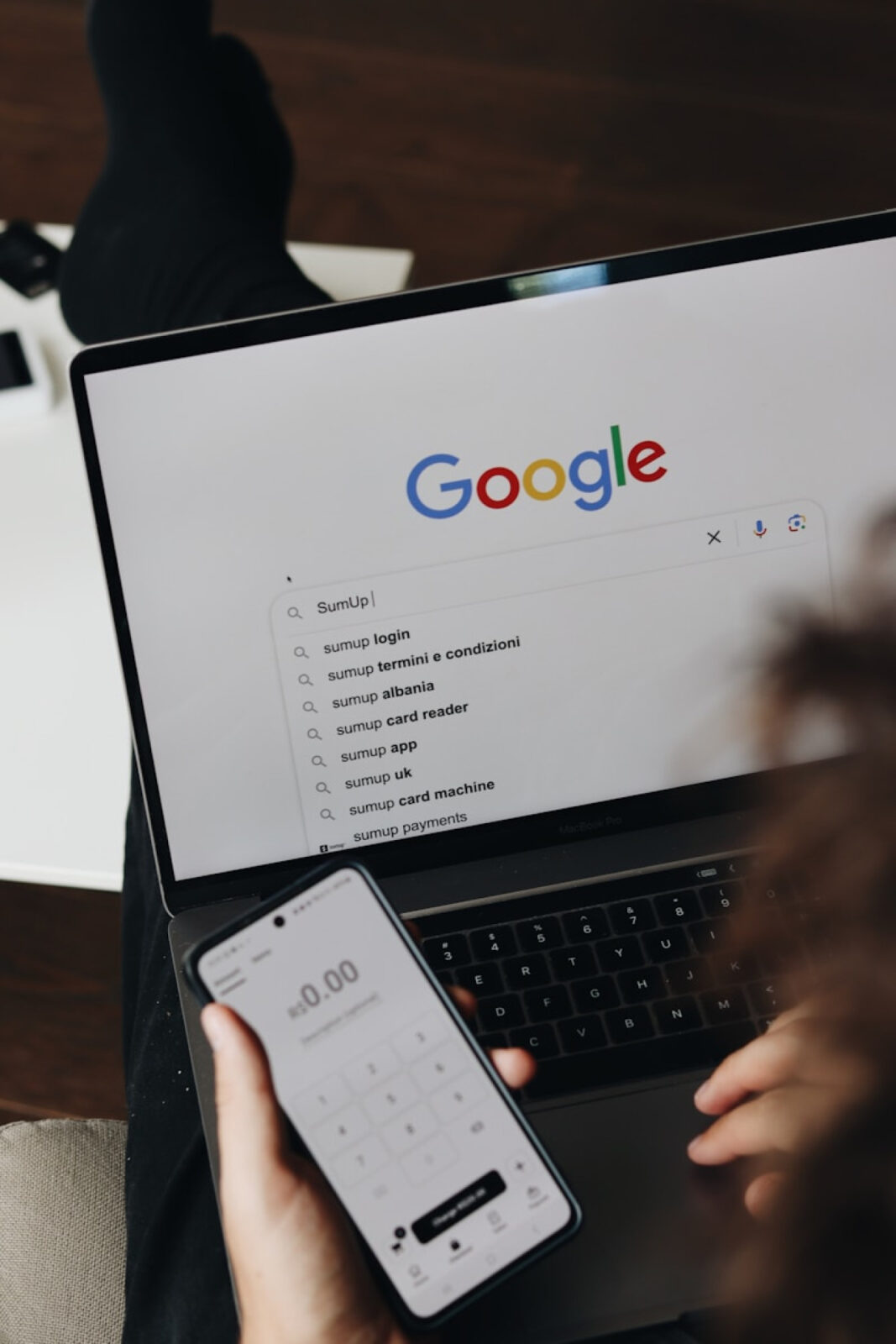
Appearing on the first page of Google is the ultimate goal for any business or content creator aiming to exist online. It's the key to maximum visibility, qualified traffic, and ultimately, sustainable growth. But how can you achieve this? This guide reveals a comprehensive method and actionable strategies to not only reach the top 10 results but also maintain your position against ever-increasing competition.
Being on the first page of Google means existing. Being on the second page means being invisible. This harsh reality is confirmed by all available studies: over 90% of clicks are concentrated on the first page results, and the vast majority of users never bother to click on "Next Page." If your site doesn't appear in these top ten results, you're leaving the bulk of your potential traffic to your competitors.
I know this goal may seem daunting, even unreachable when you're just starting out. But let me say right away: reaching the first page of Google is neither reserved for large companies with massive budgets, nor the result of some digital sorcery. It's the outcome of a method, smart strategic choices, and consistent work over time.
In this article, I will reveal this method to you, step by step, covering not only traditional organic SEO but also all the other gateways to the first page that most guides overlook: local SEO, featured snippets, Google Images, video, and even paid advertising. Because the first page of Google in 2025 is no longer just a list of ten blue links.
Key Takeaways from This Article
- The first page of Google includes several distinct areas (ads, local pack, featured snippets, organic results, images, videos, AI Overviews), and each represents an opportunity to appear.
- The choice of your keywords is the most determining factor: targeting the right queries is the difference between months of rewarded efforts and months of wasted efforts.
- Your site must be technically flawless (fast, mobile-friendly, properly indexed) before even thinking about content or backlinks.
- Each page of your site must be the best possible answer to the query it targets, according to Google's E-E-A-T criteria (Experience, Expertise, Authority, Trustworthiness).
- Backlinks remain one of the most powerful ranking factors: without them, reaching the first page on competitive queries is extremely difficult.
- SEO has a snowball effect: the first few months are the hardest, but each well-positioned page strengthens your domain's authority and makes it easier to rank subsequent pages.
- Realistic results appear between 1 and 6 months depending on the competition, but foundational work pays off for years.
Let's start by understanding what you really aim for when you say "first page of Google."
Anatomy of a Google Results Page in 2025
Today's first page of Google looks nothing like it did ten years ago. It has become significantly richer, more complex, and diverse. Understanding its structure is fundamental, as it radically expands your strategic options.
This comprehensive guide will help you appear on the first page of Google by applying proven SEO methods and tips.
To appear on Google's first page, it is essential to conduct an in-depth SEO competitive analysis and outperform your rivals.
Paid Ads (Google Ads)
At the very top of the page, and sometimes at the bottom, you'll find Google Ads. They are marked with the label "Sponsored" and occupy the most visible positions. These are auctioned placements: you pay each time a user clicks on your ad. I'll delve into this further in the section dedicated to SEA.
Reaching the first page of Google requires a solid SEO strategy, as detailed in this comprehensive guide.
The Local Pack
For searches with a geographical component ("Italian restaurant Lyon", "plumber near me"), Google displays a box with a map and three local businesses. This is known as the local pack, and it's an extraordinary opportunity for businesses with a physical address.
Reaching the first page of Google is an achievable goal, but first, you need to understand why your site isn't ranking.
Featured Snippets (Position 0)
Above even the first organic result, Google sometimes displays a box that directly answers the user's question. This is the famous "position 0," the Holy Grail of visibility. It can take the form of a paragraph, a bulleted list, a table, or a series of steps.
"People Also Ask"
This expandable box groups related questions that other users ask on the same topic. Appearing in these questions offers considerable additional visibility and a significant click-through rate.
Classic Organic Results
These are the famous "ten blue links," even though they are no longer always ten, nor always blue. This is where traditional organic search optimization comes into play. Ranking in these results requires foundational work, but the benefits are lasting and free.
If you want to appear on the first page of Google, analyzing why your competitor is better ranked is a strategic step.
To appear on the first page of Google, it is essential to know if your site is well-ranked by following key indicators.
Image and Video Carousels
For certain queries, Google integrates image or video carousels directly into the results page. This is an often underestimated entry point, yet it can generate significant traffic.
Reaching the first page of Google requires knowing if your site is well-ranked, by following SEO best practices.
This guide reveals the method to appear on the first page of Google, explaining how to improve your site's SEO.
This guide will help you appear on the first page of Google and teach you how to know if your site is well-ranked.
To appear on the first page of Google, a thorough SEO analysis of your site is essential to identify the levers.
AI Overviews
The latest evolution, AI Overviews are summaries generated by Google's artificial intelligence, displayed at the top of certain results. They synthesize information from multiple sources and cite the sites from which they extract data. Their deployment is still gradual, but they are already redefining how users interact with results.
The crucial point I want you to remember is that there are multiple paths to the first page, not just one. Your strategy should not be limited to traditional organic results: the local pack, featured snippets, images, and videos are all territories to conquer, often with less competition.
How Google Decides Who Deserves the First Page
To appear on the first page, you need to understand what Google is looking for. And what it's ultimately looking for is quite simple to articulate: it wants to display the most relevant, reliable, and user-friendly results for each query.
The Three Pillars of Ranking
Google's entire algorithm fundamentally rests on three pillars:
- Relevance: Does your content precisely match what the user is searching for? If someone types "how to plant tomatoes in pots," Google wants to show them a page that specifically addresses this topic, not a general page about gardening.
- Authority: Is your site recognized as a reliable and credible source in its field? Backlinks (links from other sites to yours), your brand's reputation, and peer recognition are the main indicators of authority.
- User Experience: Is your site fast, pleasant to use, well-structured, and mobile-friendly? Google doesn't want to send its users to a slow, confusing, or hard-to-read site.
The Three-Step Process
Before ranking anything, Google must first discover your site (crawling), then record your pages in its index (indexing), and finally evaluate their quality to determine their position (ranking). If any of these three steps is blocked, the rest is moot.
My opinion on this subject is as follows: there is no magic formula, but there is a perfectly understandable logic. Google wants to satisfy its users. If you create a site that satisfies users better than others, Google will eventually reward you. Everything else is just a matter of method and patience.
Why Most Sites Never Reach the First Page
Before showing you the way, I want to highlight the obstacles that trip up the majority of site owners. Knowing them will help you avoid making the same mistakes.
The Five Most Common Mistakes
The first mistake, and by far the most common, is targeting overly competitive keywords. A newly created site attempting to rank for "car insurance" or "cooking recipe" is competing with giants that have been investing millions of euros in content and SEO for decades. It's a battle lost before it even begins.
The second mistake is creating content without a keyword strategy. Writing what inspires you without checking if anyone is searching for it is like opening a store in a deserted alley. Your product might be excellent, but no one walks past the window.
The third is neglecting the technical side. A slow site, poorly indexed, not mobile-friendly, riddled with 404 errors—these are invisible barriers that prevent Google from doing its job, and thus from ranking you.
The fourth is ignoring backlinks. Content alone, no matter how exceptional, is usually not enough to reach the first page for competitive queries. Backlinks are the fuel of authority, and authority is what distinguishes sites of comparable quality.
The fifth, and perhaps the most insidious, is lacking patience. SEO is a medium to long-term investment. Results are not immediate, and many site owners give up after two or three months without visible results, even though they were on the right track.
A study by Ahrefs revealed that less than 10% of published web pages receive significant organic traffic. This figure isn't meant to discourage you, but to show you that the method makes all the difference. If you apply what I will teach you in this article, you'll be part of that 10%.
Let's move on to the foundations. Because without them, nothing that follows will work.
Ensuring Google can find and index your site
This is the absolute foundation, the prerequisite without which everything else is in vain. If Google cannot access your site, crawl it, and record it in its index, you won't appear anywhere, no matter the quality of your content.
Check the indexing
The first thing to do is type site:yourdomain.com into Google. If results appear, Google knows your site. If the page is empty, you have an indexing issue to resolve as a priority.
Set Up Google Search Console
If you haven't already, head over to Google Search Console and add your site. It's free, it's official, and it's the most essential tool for any site owner. It allows you to see which pages are indexed, detect errors, track your rankings, and communicate directly with Google.
Create and Submit an XML Sitemap
The sitemap is a file that lists all the important pages of your site. It works like a map you give to Google's bots to make their job easier. If you're using WordPress, plugins like Yoast SEO or Rank Math generate it automatically. Submit it in Search Console, under the "Sitemaps" section.
Check the robots.txt File and noindex Tags
The robots.txt file provides instructions to Google bots on which areas of your site they can crawl. Ensure it doesn't accidentally block important pages. Similarly, make sure no noindex tags are present on your strategic pages. On WordPress, check under Settings > Reading that the "Discourage search engines from indexing this site" box is unchecked.
Ensure a Technically Flawless Site
My experience has taught me something striking: 80% of the sites I audit have at least one critical technical issue. A technically faulty site is like a race car with a seized engine. No matter the skill of the driver or the beauty of the bodywork, it won't move forward.
HTTPS Mandatory
If your site is still on HTTP, migrate it to HTTPS immediately. It's been an official ranking factor since 2018, and an unsecured site displays a warning in the browser that drives visitors away. Most hosts offer free SSL certificates via Let's Encrypt.
Optimal Loading Speed
Google measures your site's speed through the Core Web Vitals, three specific metrics:
| Metric | What it measures | Goal |
|---|---|---|
| LCP (Largest Contentful Paint) | Loading time of the main element | Less than 2.5 seconds |
| FID (First Input Delay) | Responsiveness during the firstinteraction | Less than 100 milliseconds |
| CLS (Cumulative Layout Shift) | Page visual stability | Less than 0.1 |
To test your site, use Google PageSpeed Insights or GTmetrix. The most common solutions to improve speed are image compression (ShortPixel, Imagify), enabling caching (WP Super Cache, W3 Total Cache), using a CDN (Cloudflare), and choosing quality hosting.
Perfect Mobile Compatibility
Google uses mobile-first indexing, which means it evaluates your site based on its mobile version first. If your site is unreadable, slow, or poorly arranged on a smartphone, your ranking will directly suffer, even for searches conducted from a computer.
Logical Site Architecture
Every important page on your site should be accessible within three clicks from the homepage. A deep and labyrinthine architecture makes crawling difficult for bots and navigation frustrating for your visitors. Think of your site as a tree: a trunk (the homepage), main branches (your categories), and leaves (your pages and posts).
Install and Configure the Right Tools
Before diving into content creation or link building, ensure you have the right measurement tools. Here are the tools I consider essential:
- Google Search Console: for technical monitoring, position tracking, and indexing error diagnostics.
- Google Analytics 4: to measure your traffic, understand visitor behavior, and identify your top-performing pages.
- An SEO plugin (if you're on WordPress): Yoast SEO or Rank Math guide you in optimizing each page and automatically manage technical aspects (sitemap, tags, structured data).
- A keyword research tool: Ubersuggest (free to some extent), Google Keyword Planner (free), or more comprehensive solutions like Semrush or Ahrefs (paid but extraordinarily powerful).
Each tool has its specific role, and none can replace the others. Together, they form the cockpit from which you will steer your SEO strategy.
The foundations are laid. Now let's move on to what I consider the most decisive lever of the entire process: keyword selection.
Choosing the right keywords: the key to everything
I can't put it more clearly: your choice of keywords determines, more than any other factor, your chances of reaching the first page. Choosing the right keyword is choosing a battle you can win. Choosing the wrong one is condemning yourself to failure before you've even started.
The concept of keyword difficulty
Each keyword has a level of competition, which SEO tools typically express as a difficulty score (from 0 to 100). A keyword with a difficulty of 15 is accessible to a modest site. A keyword with a difficulty of 80 requires considerable authority, dozens of quality backlinks, and exceptional content.
Short-tail vs Long-tail
Short-tail keywords are short and generic queries: "SEO," "yoga," "shoes." They have a high search volume but fierce competition. Long-tail keywords are longer, more specific: "how to start yoga at home after 50," "waterproof trail shoes for women." Their volume is lower, but the competition is less intense, and the visitors are much more qualified.
My opinion is clear: if your site is less than two years old or has fewer than 50 published articles, focus exclusively on long-tail keywords. This strategy offers the best effort/result ratio and will allow you to gradually build the authority needed to eventually target more competitive keywords.
The Golden Rule
Never target a keyword without checking two things: that people are actually searching for it (search volume greater than zero), and that you have a realistic chance of reaching the top 10 for that query (SEO difficulty compatible with your site's current authority).
Step-by-Step Method to Find Your Winning Keywords
Here is the exact method I use to identify keywords that offer the best chances of reaching the first page.
Step 1: Brainstorm topics related to your business. List all themes, questions, and issues your audience might search for. Don't filter at this stage, let the ideas flow.
Step 2: Use Google Suggest. Type each of your topics into Google and observe the autocomplete suggestions that appear. These are real queries typed by real users. Note the most relevant ones.
Step 3: Explore the People Also Ask. Scroll through the results and take note of the questions displayed in the "People Also Ask" box. Each question is a potential article.
Step 4: Analyze your competitors' keywords. Use Ubersuggest or Semrush to discover which keywords your competitors are ranking for. This often reveals opportunities you hadn't considered.
Step 5: Check the monthly search volume. A keyword that no one searches for has no value, even if you find it personally fascinating.
Step 6: Assess SEO difficulty. The tools mentioned above provide you with a difficulty score. Aim for keywords with a difficulty below 30-40 if your site is new.
Step 7: Select "sweet spot" keywords. These are the ones that combine sufficient search volume (at least 100-200 searches per month) with accessible difficulty. This is the territory where you can realistically reach the first page.
Step 8: Organize into thematic clusters. Group your keywords by related themes. Each cluster will become a group of articles linked together by a coherent internal linking structure.
One Page = One Main Keyword
It's a fundamental rule that I see violated daily: every page on your site should target only one main keyword. If two different pages on your site target the same keyword, they compete against each other in Google's results. This is known as cannibalization, and it's one of the surest ways to not reach the first page with either.
Create a planning table that assigns a unique keyword to each page or article:
| Main Keyword | Search Intent | Target URL | Status |
|---|---|---|---|
| how to plant tomatoes in pots | Informational | /planter-tomates-pot | Published |
| best potting soil fortomatoes | Commercial | /meilleur-terreau-tomates | To be written |
| when to harvest cherry tomatoes | Informational | /recolte-tomates-cerises | In progress |
This table becomes your editorial roadmap. It prevents you from duplicating content, cannibalizing your own pages, and wasting time on unapproved topics.
Now that your keyword strategy is in place, let's move on to creating the content that will propel you to the first page.
What Google Considers First Page Content
Google has formalized its quality criteria through the E-E-A-T framework: Experience, Expertise, Authoritativeness, and Trustworthiness. It is not a technical score that the algorithm calculates directly, but rather the philosophy that guides the adjustments of this algorithm.
Experience
Does your content reflect real, lived experience of the subject matter? An article about buying property in Paris written by someone who has actually purchased an apartment in Paris will always be superior to a theoretical compilation. Google has become remarkably adept at detecting this authenticity.
Expertise
Do you demonstrate verifiable competence? If you write about nutrition, are you a nutritionist, or at the very least, have you studied the subject in depth and can you prove it? Detailed author biographies, displayed qualifications, and cited sources are all signals of expertise.
Authority
Are you recognized as a reference in your field? Backlinks from other reputable sites, press mentions, and citations by your peers gradually build this authority.
Trustworthiness
Does your site inspire trust? HTTPS, clear legal notices, privacy policy, verifiable sources, authentic reviews—each element contributes to the perception of trustworthiness.
The Best Answer Rule
Beyond E-E-A-T, I propose a simple rule that I personally apply: for every keyword I target, my page must be the best available answer on the entire web. Not a good answer. Not one answer among others. The best. If you cannot honestly claim this, rework your content until you can.
The Writing Method to Aim for the First Page
Here is the process I follow for every piece of content I create with the ambition of ranking on the first page.
Analyze search intent. Before writing a single word, type your keyword into Google and study the current results. Google shows you what it considers the best answer. If the top results are detailed guides, write a guide. If they are lists, write a list. Going against the dominant intent is a strategic mistake.
Study the top five results. Read them carefully. Note their structure, length, angle, and the elements they include. Identify what they do well, but more importantly, identify what they don't do, or don't do well enough. It's in these gaps that your competitive advantage lies.
Define a unique angle. What can you offer that others can't? Your personal experience, original data, a bold viewpoint, concrete examples that no one else provides, a more digestible format, a more recent update.
Structure rigorously. Use logical H2 and H3 tags, each ideally containing a secondary keyword or a natural variation of the main keyword. The structure of your article should be so clear that a hurried reader could grasp the essentials just by reading the subheadings.
Write comprehensive and actionable content. Each section should provide concrete value. Avoid filler, repetitions, and vague generalities. Prefer precise examples, sourced figures, detailed steps, and well-argued personal opinions.
Enhance with visual elements. Tables, annotated images, screenshots, infographics — these elements improve readability, increase time spent on the page, and offer opportunities for positioning in Google Images.
Optimize your title tag. Place the main keyword at the beginning, keep it under 60 characters, and include an element that encourages clicks (a number, a promise, a powerful word).
Write an engaging meta description. While it doesn't directly influence ranking, it determines your click-through rate. A high CTR sends a positive signal to Google. Keep it under 155 characters, include the keyword, and clearly state a benefit.
Optimize On-Page SEO for Each Content
On-page SEO involves all the optimizations you make directly on your pages. Here is the complete checklist I systematically apply:
style="border:1px solid #ddd; padding:10px;">Courte, descriptive, inclut le mot-cléEach element of this checklist is a signal you send to Google. Individually, each has a modest impact. Collectively, they create a considerable cumulative effect.
Frequency and Regularity: Publish Like a Metronome
Google rewards sites that regularly publish quality content. It's not that it penalizes static sites, but a site that is constantly enriched sends a signal of vitality and encourages bots to return more frequently.
My recommendation is simple: determine a pace you can maintain in the long term, and stick to it. One optimized article per week is an excellent pace. Two per month is quite respectable. What matters is consistency. Publishing frantically for two weeks and then disappearing for three months is the worst possible approach.
And don't forget an extraordinarily underutilized lever: updating your existing content. Taking an article published a year ago, enriching it with recent information, correcting its weaknesses, and republishing it with an updated date can yield spectacular results, sometimes even surpassing the creation of entirely new content.
The content is in place. Now let's move on to what will give it the power needed to reach the first page on competitive queries.
Getting Backlinks: The Factor You Can't Ignore
Backlinks, along with content, are the most powerful pillar of SEO. A backlink is a link that another website makes to yours. Google interprets each backlink as a vote of confidence: "This site recommends this one, so this one must be noteworthy."
But not all backlinks are created equal. A link from a recognized site in your field, with strong authority and real traffic, is worth infinitely more than a hundred links from obscure sites, unrelated in theme, created solely to manipulate rankings.
Effective Strategies
Linkable content. Create resources so useful, so original, or so comprehensive that other sites will naturally want to cite them. Comprehensive guides, studies with original data, well-designed infographics, and free online tools are the formats that attract the most spontaneous links.
Guest articles. Offer to write a quality article for blogs that complement yours, in exchange for a link to your site. This is a perfectly legitimate practice, provided the article adds real value to the host site and is not just an advertising ploy.
Digital press relations. Reach out to journalists or influential bloggers in your sector when you have something truly interesting to share: an original study, an innovative tool, or a strong stance on a current issue.
Broken link technique. Identify broken links (404 error) on high-authority sites in your sector, create content that could replace the missing resource, then contact the webmaster to suggest replacing the broken link with a link to your content. It's an elegant approach that benefits everyone.
Partnerships and testimonials. Offer your suppliers, partners, or clients a testimonial for their site. In return, you usually get a link to yours. It's natural, mutually beneficial, and perfectly acceptable in Google's eyes.
What to Avoid
Buying links in bulk, private blog networks (PBN), systematic reciprocal link exchanges, and link farms are practices that Google detects and penalizes. The penalties can be severe and long-lasting. It's simply not worth the risk.
Strengthening Your Brand and Digital Presence
This is an aspect of SEO that is gaining importance every year and, in my opinion, represents the future of search engine optimization. Google increasingly values sites associated with a recognizable brand, known and sought after.
Concrete Actions
- Create a comprehensive, authentic "About" page that tells your story and introduces your team.
- Be present and active on social media, not for the direct SEO benefit (which is marginal), but to build a community and reputation.
- Aim to be mentioned on other sites, even without a link. Google can detect unlinked brand mentions and interpret them as a signal of authority.
- Encourage brand searches: when people type your name into Google, it's an extremely positive signal. The more your brand is searched, the more Google considers it legitimate.
In my opinion, brand building is the SEO of the future. Algorithms change, techniques evolve, but a strong and recognized brand will weather all algorithmic storms.
So far, we've covered the classic path to the first page via organic results. But as I promised in the introduction, there are other entry points, often more accessible.
Appear in the Google Local Pack
If your business has a physical address or serves a specific geographic area, the local pack is a golden opportunity. It appears for millions of local queries and offers immediate visibility, often with less effort than traditional SEO.
Create and Optimize Your Google Business Profile
This is the first step, and it's free. Visit Google Business Profile and create your listing if you haven't already. Fill out each field meticulously:
- Name, Address, Phone (NAP): these details must be accurate and consistent wherever they appear online.
- Main Category: choose the most precise category possible. "Italian Restaurant" is much better than "Restaurant."
- Description: write a comprehensive description naturally incorporating your local keywords.
- Photos: regularly add high-quality photos. Google favors active and visually rich profiles.
- Google Posts: publish news, offers, and events directly on your profile. It's an activity signal that Google appreciates.
Customer Reviews
Reviews play a crucial role in local ranking. Their quantity, quality, freshness, and your responsiveness to them are all signals that Google considers. Consistently encourage your satisfied customers to leave a review, and respond to each review, both positive and negative, in a professional and personalized manner.
The consistency of local citations
Your information (name, address, phone number) must be exactly the same across all directories, listings, and sites where your business is mentioned: Yellow Pages, Yelp, TripAdvisor, professional directories, chamber of commerce, etc. Any inconsistency (an abbreviation here, a different phone number there) creates doubt in Google's mind and can harm your local ranking.
Appear in position 0 (featured snippet)
Position 0 is the highlighted box that Google displays above the first organic result to directly answer the user's query. Appearing there means gaining maximum visibility, sometimes even more clicks than the result in position 1.
Types of Featured Snippets
- The paragraph: a direct answer in a few sentences. This is the most common format.
- The list: a bulleted or numbered list, typically for steps in a process or items in a category.
- The table: a comparative or summary table, often for numerical data.
How to Structure Your Content to Be Selected
The key is to directly and concisely answer the targeted question, ideally within the first 40 to 60 words following the subheading that poses this question. Google draws from this format to populate its snippet.
For example, if you're targeting the question "How long does it take to appear on Google's first page?", structure your content like this: an H2 or H3 subtitle that restates the question, immediately followed by a concise and direct answer, then a more detailed explanation. Google will extract the concise answer to display it in position 0.
For lists, use bullet or numbered list tags. For tables, use actual HTML tables. Google needs this semantic structure to correctly identify and extract information.
Appear in Google Images and Google Videos
These two channels are shortcuts to the first page that most of your competitors blissfully ignore. And that's precisely what makes them such an interesting opportunity.
Google Images
Images frequently appear in standard search results as integrated carousels. To appear there, optimize every image on your site:
- Descriptive alt tag: describe the content of the image by naturally integrating a relevant keyword.
- File naming: rename your files before uploading them.
homemade-chocolate-fondant.jpgis infinitely preferable toIMG_20240315.jpg. - Original images: photos taken by you, infographics created by you, screenshots annotated by you have much more value than stock images that hundreds of other sites already use.
- Format and compression: use the WebP format, compress your images, and ensure they load quickly.
Google Videos and YouTube
YouTube is the second largest search engine in the world, and YouTube videos appear directly in Google results. If you have the opportunity to create video content, even simple, it's a considerable visibility lever.
Optimize your YouTube videos as you would an article: title containing the keyword, detailed and keyword-rich description, relevant tags, attractive thumbnail. Embed your videos in corresponding blog posts to enrich content and increase time spent on the page.
Appear via Google Ads: the paid route
I would be remiss not to mention the paid route. Google Ads allows you to appear instantly at the top of the first page for your chosen keywords, at a cost per click.
When SEA is relevant
SEA is particularly useful in three situations. First, when launching a new site: it offers immediate visibility while your SEO gradually builds. Next, for ultra-competitive keywords where SEO alone would take years to yield results. Finally, for one-off campaigns: promotions, product launches, seasonal events.
The Limitations of SEA
The fundamental limitation is simple: traffic stops abruptly as soon as your budget is exhausted. Unlike SEO, which builds a lasting asset, SEA is a rental: you pay to occupy space, and as soon as you stop paying, you disappear.
In my opinion, SEA and SEO are complementary, not antagonistic. SEA is an accelerator that gives you immediate visibility. SEO is an investment that provides lasting visibility. The smartest strategy is often to start with both in parallel, then gradually reduce the SEA budget as SEO takes over.
You now have all the strategies. But how do you know if your efforts are paying off?
How to Track Your Progress to the First Page
Tracking your rankings is essential to measure the effectiveness of your strategy and adjust it in real-time.
The Metrics That Matter
- Keyword Position: Track the changes in your rankings for each targeted keyword. This is the most direct metric.
- Organic Traffic: Measured in Google Analytics, it's the number of visitors arriving at your site via Google's natural results.
- Number of Pages in Top 10: This is an indicator of your overall SEO health. The more this number increases, the stronger your authority becomes.
- CTR by Query: A low CTR on a query where you rank well indicates an issue with your title tag or meta description.
- Impressions Trend: Impressions show how often your pages appear in results, even without clicks. An increase in impressions often signals an upcoming rise in traffic.
Create a Monthly Dashboard
I recommend creating a simple tracking dashboard that you update each month:
| Indicator | Month 1 | Month 2 | Month 3 | Trend |
|---|---|---|---|---|
| Pages in top 10 | 3 | 5 | 9 | ↗ Increasing |
| Monthly organic traffic | 450 | 720 | 1,180 | ↗ Increasing |
| Search Console impressions | 12,000 | 18,500 | 27,000 | ↗ Inincrease |
| Average CTR | 2.8% | 3.2% | 3.9% | ↗ Increasing |
This type of table, even if basic, gives you a clear view of your progress and allows you to quickly detect positive signals or areas of concern.
How long to reach the first page?
This is the question everyone asks, and I will give you an honest answer rather than a misleading promise. The time required mainly depends on the competition for your target keywords:
- Low competition keywords (long-tail, specific niches): 1 to 3 months.
- Moderately competitive keywords: 3 to 6 months.
- Highly competitive keywords: 6 to 12 months, sometimes longer.
Several factors can speed up the process: the age of your domain, existing quality backlinks, an already established thematic authority. Others slow it down: a brand new site, an ultra-competitive niche, uncorrected technical errors.
I want to warn you against anyone who guarantees you a first page ranking within a specific timeframe. No one can guarantee that, not even the best SEO experts in the world. Google is the sole decider, and its algorithm is constantly evolving. What can be guaranteed is that methodical and persistent work always pays off in the end.
My personal opinion is that methodical patience is the rarest and most valuable SEO skill. Almost everyone understands the techniques. Almost no one has the discipline to apply them consistently for six months without immediate visible results.
The "snowball" strategy: how results accelerate over time
This is the most encouraging phenomenon in organic search, and the one that should give you the energy to persevere during the first few months, which are invariably the most challenging.
SEO has a snowball effect. Each page that reaches the first page strengthens your domain's overall authority. And the more your domain gains authority, the easier it becomes to rank new pages. The first articles you get to the first page will require a tremendous amount of effort. The subsequent ones will require less and less.
In practical terms, the first few months often resemble a discouraging plateau: you work hard, publish quality content, optimize everything possible, and the results are modest, if not imperceptible. Then, somewhere between the third and sixth month, the curve shifts. One page reaches the top 10, then another, then three, then ten. The cumulative effect kicks in, and growth accelerates exponentially.
I have observed this phenomenon on every site I have supported. Without exception. The only variable is the time needed to reach the inflection point, which depends on the competition and the intensity of the work put in.
Answers to the Most Frequently Asked Questions
Is it possible to appear on Google's first page for free?
Yes, absolutely. Organic search engine optimization is, by definition, free. You don't pay Google to appear in organic results. The only cost is your time, energy, and possibly the tools you use. Some sites reach the first page without ever spending a penny, solely through exceptional content and a methodical strategy.
Do you need to be a computer expert to do SEO?
No. The vast majority of SEO techniques are accessible to anyone who knows how to use a computer and is willing to learn. Tools like WordPress, Yoast SEO, and Google Search Console are designed to be user-friendly for non-technicians. The more technical aspects (code optimization, server configuration) can be occasionally delegated to a developer if necessary.
How much does it cost to reach the first page of search results?
If you do everything yourself, the cost can be almost zero (excluding hosting and domain name). If you hire an <a href=””>SEO professional</a>, prices vary significantly: from a few hundred euros per month for basic support to several thousand for a comprehensive strategy. The investment depends on your goals, your industry, and the competition.
My site is new, do I stand a chance against established sites?
Yes, provided you choose the right keywords. A new site cannot compete with established sites on highly competitive keywords, but it can quickly rank for long-tail keywords. It's the guerrilla strategy: you don't storm the fortresses, you take the back roads, and you gradually build your territory.
What are the easiest keywords for a beginner to target?
Long-tail keywords (4 words or more), specific questions ("how...", "why...", "what is the best... for..."), and local keywords ("[service] + [city]") are generally the most accessible. Use a tool like Ubersuggest to check that the SEO difficulty is below 30.
Can you guarantee a first page on Google?
No. Anyone who guarantees you the first page is either dishonest or incompetent. Google is an independent entity that constantly changes its criteria. What a serious professional can guarantee you is a rigorous methodology, measurable efforts, and consistent progress. The final result depends on too many variables to be guaranteed.
Is the first page of Google the same for everyone?
No. Google results are personalized based on your geographical location, search history, device (mobile or desktop), and language. That's why I always recommend checking your rankings in incognito mode, or using position tracking tools that simulate non-personalized searches.
Will artificial intelligence make SEO obsolete?
This is the question of the moment, and my opinion is nuanced. AI is transforming the SERP (notably with AI Overviews), but it does not make SEO obsolete. It evolves it. The sites cited in AI responses are precisely those that demonstrate the strongest expertise, greatest authority, and best content quality. In other words, the SEO fundamentals we covered in this article remain more relevant than ever. What changes is the format of the results, not the criteria that determine who appears there.
Key Takeaways for Taking Action
If I had to condense this entire article into three priority levers, here's what I would tell you.
Firstly, choose your battles wisely. Keyword selection is the most determining factor of your success. Target queries where you have a realistic chance of ranking, and build your authority progressively from there.
Secondly, create content that deserves the first page. Not content that "should suffice," not "adequate" content. Content that is, objectively and honestly, the best available answer for the targeted query. It's demanding, but it's the only approach that works sustainably.
Thirdly, leverage all entry points, not just traditional organic results. The local pack, featured snippets, Google Images, video — each of these channels represents an opportunity to reach the first page, often with less competition than traditional results.
The first page of Google is not a final destination; it's an ongoing process. Every article published, every optimization made, every link acquired is a step further in that direction. The sites that achieve this are not necessarily the biggest or the oldest. They are the ones whose owners have understood the rules of the game, chosen the right battles, and had the perseverance to work methodically, month after month, without getting discouraged.
Your site has all the potential needed to reach the first page. It only lacks the strategy, the right tools, and your determination to apply them. Start today by choosing a keyword, creating an exceptional page, and laying the first brick of your visibility. The rest will follow.
Frequently Asked Questions to Appear on Google's First Page
How long does it take to reach Google's first page?
The time required to appear on Google's first page varies significantly. For less competitive queries, a few weeks may suffice. For highly competitive keywords, it can take several months or even more than a year. It depends on numerous factors, including your domain's authority, the quality of your content, the intensity of the competition, and the effectiveness of your link-building strategy. Patience and perseverance are essential in SEO.
Is it possible to appear on the first page without doing netlinking?
Yes, it is possible to appear on Google's first page without an aggressive netlinking strategy, especially for long-tail queries or in less competitive niches. However, for more competitive keywords, netlinking remains a major ranking factor. Without quality backlinks, it is extremely difficult to compete with sites that have strong authority. Netlinking is a strong signal to Google regarding your site's relevance and trustworthiness.
What are the main criteria for Google's ranking?
Google uses hundreds of criteria to rank pages. The most important include content relevance and quality (which must meet user intent), user experience (site speed, mobile compatibility), domain authority (via backlinks), technical optimization (crawlability, indexing), and E-E-A-T signals (Experience, Expertise, Authority, Trustworthiness). A holistic approach is necessary for good positioning.
Should I focus solely on organic search for the first page?
No, focusing solely on organic search (SEO) would be a mistake. The first page of Google offers multiple opportunities: paid ads (SEA), the local pack for physical businesses, featured snippets, image and video results, and even AI Overviews. A comprehensive strategy integrates several of these levers to maximize your visibility and capture diverse traffic. Don't put all your eggs in one basket.
